Imagine you are chatting with someone new. The conversation is going well, you are laughing, sharing stories, and suddenly they send a message saying:
“I’m not looking for a relationship right now, but maybe we can be FWB.”
You stop for a moment and think, “What does FWB mean in text?” Is it a friendly nickname? A casual friendship? Or something else?
With the rise of texting, social media, and online dating, short forms like FWB have become common. Many people use these abbreviations to express feelings, relationships, or situations quickly without typing long explanations.
In this article, you will learn the complete FWB meaning in text, how people use it in chats, what it means from a girl or a guy, whether it can sound rude, and how to understand its meaning based on context.
Quick Answer: FWB Meaning in Text
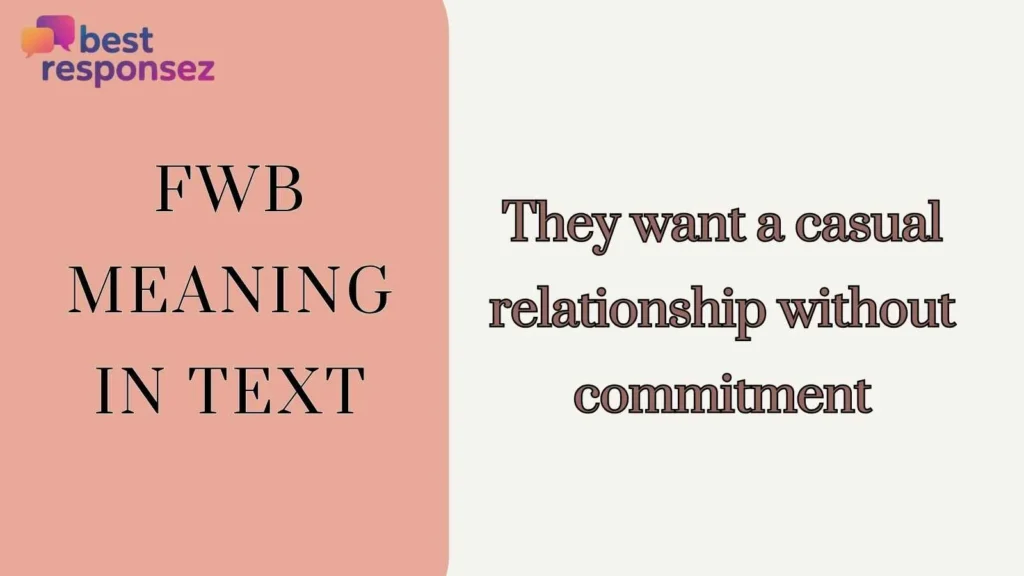
FWB meaning in text is “Friends With Benefits.” It describes a relationship where two people are friends but also have a physical or intimate connection without being in a traditional romantic relationship.
People usually use FWB when:
- They want a casual relationship without commitment.
- They are talking about dating situations.
- They want to describe a non-serious connection.
- They are discussing modern relationship styles.
- They want a short way to explain their situation.
What Does FWB Mean in Text?
The FWB meaning in text is “Friends With Benefits.”
In simple words, FWB refers to two people who are friends and share a physical or intimate relationship but do not consider themselves a boyfriend-girlfriend or serious couple.
The term became popular through online dating, social media, movies, and internet conversations. People often use it because typing “friends with benefits” is longer, while FWB is quick and widely understood.
Simple Explanation
When someone says:
“We are FWB.”
They usually mean:
- “We are friends, but our relationship is more than normal friendship.”
- “We spend time together casually.”
- “We are not officially dating.”
Mini Examples:
Example 1:
Person A: “Are you two dating?”
Person B: “No, we are just FWB.”
Meaning: They are not a couple but have a casual connection.
Example 2:
Person A: “What are you looking for?”
Person B: “Something casual, maybe FWB.”
Meaning: They want a relationship without serious commitment.
Example 3:
Person A: “Is he your boyfriend?”
Person B: “No, he’s my FWB.”
Meaning: Their relationship is not official.
Where Is FWB Commonly Used?
The slang term FWB is commonly seen across different online platforms and messaging apps.
Text Messages
People use FWB in private conversations when discussing dating, friendships, or relationship preferences.
Example:
“Are you still FWB with him?”
WhatsApp users often use FWB when chatting about personal relationships with friends.
Example:
“My friend asked if we are dating, but we are only FWB.”
Snapchat
Since Snapchat conversations are often casual and personal, FWB may appear in private chats between people.
People may use FWB in direct messages (DMs), dating discussions, or relationship posts.
Example:
“Looking for something casual, not FWB.”
TikTok
TikTok users often mention FWB in videos about dating trends, relationships, and modern slang.
Gaming / Discord
FWB is less common in gaming chats because most conversations focus on games. However, it can appear in general conversations between users.
Tone and Meaning Explained
The meaning of FWB usually stays the same, but the tone can change depending on the conversation.
Friendly Tone 😊
When used in a friendly way, FWB simply describes a casual relationship arrangement.
Example:
“We talked about it, and we both agreed to be FWB.”
The tone is honest and respectful.
Neutral Tone 😐
Sometimes people use FWB as a simple description without strong emotions.
Example:
“He’s not my boyfriend. We’re FWB.”
The person is just explaining the situation.
Rude or Cold Tone 😶
FWB itself is not a rude word, but it can feel cold if someone uses it to avoid emotions or dismiss another person.
Example:
“You’re just my FWB, nothing more.”
This may hurt someone if they expected a deeper relationship.
Examples of FWB in Conversation
Here are some real chat-style examples showing how people use FWB:
Example 1:
A: “Are you guys together?”
B: “No, we’re FWB.”
Example 2:
A: “What kind of relationship are you looking for?”
B: “Honestly, something casual like FWB.”
Example 3:
A: “Do you have feelings for him?”
B: “No, we agreed to keep it FWB.”
Example 4:
A: “Why don’t you call him your boyfriend?”
B: “Because we’re only FWB.”
Example 5:
A: “Are you serious about her?”
B: “Not really. It’s just an FWB situation.”
Example 6:
A: “Would you ever date your FWB?”
B: “Maybe, but right now we’re keeping things casual.”
Example 7:
A: “I don’t want a relationship. FWB works better for me.”
FWB Meaning From a Girl
When a girl uses FWB in text, the meaning usually depends on her feelings and the situation.
Possible meanings include:
- She wants something casual.
- She does not want a serious relationship.
- She feels comfortable with someone but does not want commitment.
- She is being honest about her expectations.
For example:
“I’m okay with FWB, but I don’t want anything serious.”
This usually means she wants a connection without a traditional relationship.
However, sometimes feelings can develop over time. A person may start with an FWB arrangement but later want something deeper.
Context matters more than the abbreviation itself.
FWB Meaning From a Guy
When a guy uses FWB in text, it often means he is describing a casual relationship without official commitment.
Possible meanings:
- He wants a relaxed connection.
- He is not looking for a serious relationship.
- He wants friendship combined with physical attraction.
- He is explaining his relationship status.
Example:
“I’m not ready for dating, but FWB sounds good.”
This shows he wants something casual.
However, every person is different. The meaning depends on his communication style and intentions.
Is FWB Ever Rude or Offensive?
The abbreviation FWB is not automatically rude or offensive. It is simply a slang term used to describe a type of relationship.
However, it can feel different depending on how someone says it.
Dry Tone
Example:
“You’re only my FWB.”
This may sound emotionally distant.
Passive-Aggressive Tone
Example:
“Don’t expect anything. You’re just FWB.”
This can sound disrespectful.
Polite Tone
Example:
“I think we both want something casual, like FWB.”
This sounds mature and honest.
When to Use and When NOT to Use FWB
| When to Use ✅ | When NOT to Use ❌ |
|---|---|
| Talking about casual relationships | Professional conversations |
| Discussing dating preferences | Formal messages |
| Chatting with someone who understands slang | With people unfamiliar with the term |
| Explaining a relationship situation | When someone may misunderstand your meaning |
| Online dating conversations | Serious emotional discussions without explanation |
FWB Meaning in Chat vs Social Media
The FWB meaning in chat is usually personal and direct. Someone may use it while talking privately about relationships.
Example:
“We’re FWB right now.”
On social media, the term may appear in:
- Dating discussions
- Memes
- Relationship advice videos
- Comments about modern relationships
The meaning remains the same, but social media often uses it in a broader or humorous way.
Similar Slang Words or Alternatives
| Word | Meaning | Usage |
|---|---|---|
| Situationship | A relationship without a clear label | Dating conversations |
| Casual dating | Dating without serious commitment | Relationship talks |
| Hookup | A short physical connection | Casual conversations |
| BF/GF | Boyfriend/Girlfriend | Serious relationships |
| Talking stage | Getting to know someone before dating | Modern dating slang |
Other Meanings of FWB
Although FWB meaning in text usually means Friends With Benefits, it can have other meanings in different contexts.
Some possible meanings include:
- Friends With Benefits (most common online meaning)
- Forwarding Business (rare workplace usage)
- Field Work Base (specific professional contexts)
In everyday texting and social media, Friends With Benefits is almost always the intended meaning.
Why Do People Use FWB?
People use FWB because internet communication is focused on speed and convenience.
Fast Typing
Typing “FWB” is much faster than writing “Friends With Benefits.”
Internet Culture
Online communities create short forms that become common worldwide.
Convenience
Abbreviations help people explain complicated situations quickly.
Privacy
Some people prefer using short forms when discussing personal topics.
FAQs:
1. What does FWB mean in text?
FWB means Friends With Benefits. It describes a friendship that includes a casual intimate relationship without being officially romantic.
2. Is FWB the same as dating?
No. FWB usually means a casual connection without the commitment expected in dating.
3. What does FWB mean from a girl?
It usually means she wants a casual relationship, but the exact meaning depends on her feelings and the conversation.
4. What does FWB mean from a guy?
A guy using FWB often means he wants a casual relationship without serious commitment.
5. Is FWB a bad thing?
FWB is not automatically good or bad. It depends on whether both people understand and agree about the relationship.
6. Is FWB slang?
Yes, FWB is internet slang commonly used in texting, dating apps, and social media.
Final Thoughts:
The FWB meaning in text is simple: Friends With Benefits. It is a popular slang term used to describe a casual relationship between two people who are friends but share a deeper connection without traditional commitment.
Understanding the context is important because the same word can feel friendly, neutral, or cold depending on how someone uses it.
As online communication continues to grow, slang terms like FWB help people express modern relationships quickly and easily. 💬✨

I’m Alexander Hayes, and I enjoy helping people communicate with confidence by finding the right response for every situation. I create well-researched, practical, and easy-to-follow reply guides that make conversations more natural and meaningful. My goal is to provide reliable advice and thoughtful responses that readers can use with confidence every day.