How can you learn to tell your story better If you’ve ever wondered why some people captivate an audience effortlessly while others struggle to get their point across, you’re not alone.
Learning this skill is not just about sharing events—it’s about connecting, inspiring, and leaving a lasting impression. The question “how can you learn to tell your story better” is on the minds of aspiring writers, speakers, and professionals alike, and the good news is that it’s a skill you can develop.
In this article, we’ll explore proven techniques, creative strategies, and practical tips that answer the pressing question: how can you learn to tell your story better.
From structuring your narrative to enhancing your voice and delivery, every step you take brings you closer to mastering the art of storytelling. By the end, you’ll discover that asking yourself how can you learn to tell your story better is just the first step toward becoming a memorable and impactful storyteller.
Understanding the Phrase “How Can You Learn to Tell Your Story Better?”
Before responding, it’s important to understand the intent behind this question. People might ask this in:
- Professional contexts: Job interviews, team meetings, or networking events.
- Personal development scenarios: Workshops, coaching, or self-improvement discussions.
- Casual conversations: Friends or peers curious about your hobbies or experiences.
Basically, they want to know your approach to improving communication and storytelling, and your response can reveal creativity, confidence, and personality.
Casual and Friendly Responses
Use these when chatting with friends, family, or peers in an informal setting. They’re light, relatable, and easygoing.
- “Honestly, I just practice telling stories about my coffee spills and weird dreams 😅.” (fun, relatable)
- “By embarrassing myself in front of my friends enough times to know what works!” (self-deprecating humor)
- “I watch TikToks for storytelling inspo—it’s weirdly helpful 🤯.” (trendy)
- “I just try to keep it short and funny—no one likes a rambling saga.”
- “Learning from my dog’s adventures—if I can make a story about him, I can do anything 🐶.”
- “By listening to other people tell their stories and stealing the best bits 😏.”
- “Honestly, I just talk to myself in the mirror… the classic 2025 method!”
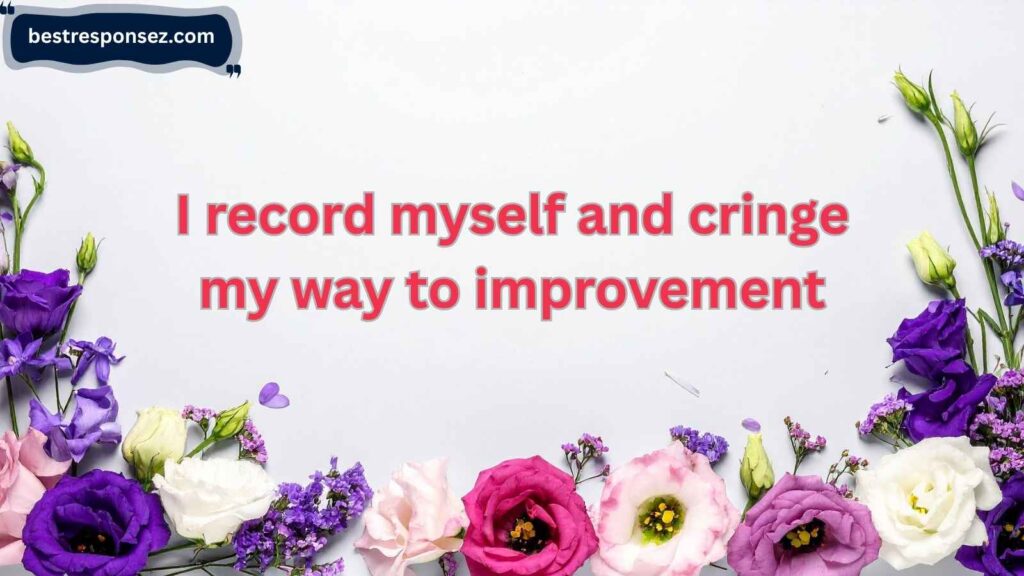
- “I record myself and cringe my way to improvement 😂.”
- “By adding random emojis—it really makes the story pop in texts 😎.”
- “Trial and error… and a LOT of coffee ☕.”
Context: Use these with friends, casual groups, or online chats where humor and relatability are appreciated.
Funny and Witty Responses
Perfect for adding humor to conversations without sounding boastful.
- “I hire an imaginary ghostwriter… and then fire them immediately 👻.”
- “By pretending my life is a Netflix series and narrating it like a trailer 🎬.”
- “I bribe my brain with snacks every time it tells a good story 🍪.”
- “By using plot twists my family will never see coming 😏.”
- “I tell it like it happened… but with more dragons and magic 🐉.”
- “By turning my embarrassing moments into comedy specials 😂.”
- “I practice in front of my cat—they’re a tough audience 🐱.”
- “By saying ‘spoiler alert’ before every boring detail 😅.”
- “I follow storytelling Consider TikTok—they know the tea ☕.”
- “I just freestyle and hope it makes sense 😎.”
Context: Best for casual, humorous conversations, social media, or icebreakers.
Romantic / Flirty Responses
If someone you like asks, these responses can be charming and playful.
- “Maybe you can be my practice audience? 😉”
- “I think I tell my best stories when you’re listening ❤️.”
- “By adding a plot twist where you’re the hero 😏.”
- “I’d rather show you than tell you 😘.”
- “My stories get better when they have a happy ending… with you 🥰.”
- “By stealing ideas from our dates 😌.”
- “I think I just need a co-author like you 😎.”
- “Every story improves with your smile in the background 😍.”
- “By imagining our adventures together 🌟.”
- “Honestly? Your reactions teach me everything 💕.”
Context: Use these in romantic texting, dates, or flirting situations where lighthearted charm is appropriate.
Professional / Polite Responses
Great for workplace settings, networking events, or mentoring sessions.
- “I focus on clear structure: beginning, middle, and end.”
- “By studying successful communicators and adapting their techniques.”
- “I practice regularly and request feedback from trusted colleagues.”
- “I read more and observe human behavior to make stories relatable.”
- “I work on connecting stories to the audience’s interests.”
- “I record my presentations to analyze tone, pacing, and clarity.”
- “I attend workshops and webinars focused on storytelling.”
- “I use visuals and data to make my stories more compelling.”
- “I reflect on past experiences and identify which details resonate most.”
- “By maintaining authenticity while keeping content concise and engaging.”
Context: Use these in interviews, meetings, or professional coaching sessions.
Texting & Social Media Responses
Quick, trendy replies for texting, Instagram DMs, or social platforms.
- “Swipe up to see my storytelling glow-up 😎📈.”
- “Just vibin’ and narrating my life story one meme at a time 😂.”
- “By posting stories in stories… meta storytelling FTW 🤯.”
- “Practicing in the group chat with my friends 😅.”
- “I just use TikTok transitions to spice it up 💫.”
- “By sending long threads no one asked for ✨.”
- “Stories are better with GIFs and emojis, obviously 😎🔥.”
- “Just captioning my chaos, one post at a time 🌀.”
- “By reading comments to see which story actually slaps 👀.”
- “Tagging people in my stories for instant feedback 😏.”
Context: Ideal for online chats, social media DMs, or informal texting.
Creative / Unique Responses
These highlight originality and imagination.
- “I imagine each story as a short film in my head 🎥.”
- “By giving inanimate objects personalities and plotlines 🤖.”
- “I write a mini-script before telling it aloud.”
- “By using sensory details—smell, touch, sound—to make it vivid.”
- “I record dreams and turn them into micro-stories ✨.”
- “I create story maps like a treasure hunt 🗺️.”
- “By experimenting with different voices and perspectives 🎭.”
- “I visualize my story as a comic strip.”
- “I narrate like I’m hosting a podcast 🎙️.”
- “I ask for feedback and remix stories like DJ sets 🎧.”
Context: Use these when aiming to impress, inspire, or show creative flair.
How Can You Learn to Tell Your Story Better (Reddit)
- 📚 Read storytelling discussions to learn different techniques.
- 💬 Practice sharing short stories and ask for feedback.
- ✍️ Rewrite your stories to improve clarity and flow.
- 🎯 Focus on one main idea instead of too many details.
- 😊 Add personal experiences to make stories relatable.
- 👂 Notice how skilled storytellers build suspense.
- 🎭 Use emotion to help readers connect with your story.
- 📖 Read books and memoirs to study storytelling styles.
- 🎥 Watch interviews and speeches from great speakers.
- 📝 Keep a journal to improve daily writing.
- 🔄 Edit your stories several times before sharing.
- 🌟 Start with an attention-grabbing opening.
- 💡 End with a meaningful takeaway.
- 🤝 Share your writing with supportive communities.
- 📱 Learn from storytelling threads and discussions online.
- 🚀 Practice consistently to build confidence.
- 💯 Great storytelling comes from observation, revision, and practice.
How Can You Learn to Tell Your Story Better (Essay)
- 📝 Start with a strong introduction.
- 🎯 Focus on one clear message.
- 📖 Organize events in a logical order.
- 😊 Include personal experiences and emotions.
- 💬 Use simple and engaging language.
- 🌟 Add descriptive details to create vivid images.
- 🔄 Connect paragraphs with smooth transitions.
- 🎭 Show actions instead of only telling facts.
- 📚 Support ideas with examples when appropriate.
- 💡 Keep your writing focused and relevant.
- 👂 Read your essay aloud to improve flow.
- ✨ Remove unnecessary information.
- 📌 End with a memorable conclusion.
- 🤝 Ask others for constructive feedback.
- 🚀 Revise your draft before submitting.
- 📖 Read essays by skilled writers for inspiration.
- 💯 Practice regularly to strengthen your storytelling skills.
How to Tell a Good Story in Conversation
- 😊 Begin with an interesting hook.
- 🎯 Get to the point without unnecessary details.
- 💬 Speak naturally and confidently.
- 😄 Use expressions and emotions.
- 👂 Pay attention to your listener’s reactions.
- 🌟 Keep the story organized.
- 🎭 Build suspense before revealing the ending.
- 📖 Include only important details.
- ✨ Change your tone to keep interest.
- 🤝 Make the story relatable.
- 📌 Avoid making the story too long.
- 💡 Add humor when appropriate.
- 🚶 Keep a comfortable pace while speaking.
- 🎉 End with a memorable punchline or lesson.
- 📱 Adapt your story to your audience.
- 🌈 Stay authentic and genuine.
- 💯 Practice telling stories in everyday conversations.
How Can You Learn to Tell Your Story Better (Reddit)
- 📚 Practice sharing stories regularly and ask for honest feedback.
- ✍️ Read books, blogs, and personal essays to study different storytelling styles.
- 🎯 Focus on one clear message instead of adding too many details.
- 😊 Tell stories from real-life experiences to sound more authentic.
- 👂 Listen to skilled storytellers and notice how they keep attention.
- 🎭 Use emotion to make your story memorable.
- 📖 Start with a strong hook that makes people curious.
- 💬 Keep your story simple, clear, and easy to follow.
- 🔄 Rewrite and edit your stories to improve the flow.
- 🌟 Add vivid details without overwhelming your audience.
- 📝 Keep a journal to practice storytelling every day.
- 🤝 Share your stories with online communities for feedback.
- 🎥 Watch interviews, TED Talks, and podcasts to learn delivery techniques.
- 💡 End your story with a lesson, surprise, or meaningful takeaway.
- 📱 Study popular storytelling posts on social media.
- 🚀 Practice speaking your stories out loud.
- 💯 Great storytellers improve through repetition, observation, and revision.
How to Tell a Story (Example)
- 📖 Begin by introducing the people and setting.
- 😊 Explain what happened to start the story.
- 🎯 Present the main problem or challenge.
- 💬 Describe how the characters reacted.
- 🌟 Add interesting details that keep attention.
- 🎭 Build suspense as the story develops.
- 📚 Show how the situation becomes more difficult.
- 💡 Reveal the turning point.
- 🚀 Explain how the problem was solved.
- ✨ Describe the final outcome.
- 📌 Share the lesson or message.
- 🤝 Keep the story organized and easy to follow.
- 😄 Use emotions to connect with your audience.
- 🌈 End with a memorable final sentence.
- 📝 Revise unnecessary details.
- 📱 Practice telling the story confidently.
- 💯 Every memorable story has a clear beginning, middle, and end.
How to Learn Storytelling Books
- 📘 The Storytelling Animal by Jonathan Gottschall
- 📖 Story by Robert McKee
- ✍️ On Writing by Stephen King
- 🎬 Save the Cat! by Blake Snyder
- 📚 Made to Stick by Chip Heath and Dan Heath
- 🌟 Building a StoryBrand by Donald Miller
- 📝 The Writer’s Journey by Christopher Vogler
- 💡 The Hero with a Thousand Faces by Joseph Campbell
- 🎭 The Anatomy of Story by John Truby
- 📖 Bird by Bird by Anne Lamott
- 🚀 Everybody Writes by Ann Handley
- 📗 Steal Like an Artist by Austin Kleon
- 🎯 The Science of Storytelling by Will Storr
- 📕 Hooked by Nir Eyal
- 🌈 The Art of Dramatic Writing by Lajos Egri
- 💬 Resonate by Nancy Duarte
- 💯 Read, analyze, and practice lessons from these books to become a stronger storyteller.
How to Tell a Story to an Audience
- 🎤 Start with a powerful hook that grabs attention.
- 😊 Speak naturally and with confidence.
- 🎯 Focus on one clear message.
- 💬 Use simple, conversational language.
- 👀 Make eye contact whenever possible.
- 🎭 Change your voice to match the emotions.
- 📖 Keep your story organized from beginning to end.
- 🌟 Include relatable characters or situations.
- 💡 Add moments of suspense or curiosity.
- ⏸️ Pause at important moments for impact.
- 😄 Use humor when it fits naturally.
- 🤝 Connect emotionally with your audience.
- 📌 Avoid unnecessary details that slow the story.
- 🚀 End with a memorable lesson or takeaway.
- 👏 Invite your audience to reflect or respond.
- 🌈 Practice your delivery before presenting.
- 💯 Confidence, emotion, and clear structure make every story more engaging.
How to Be a Good Storyteller in Writing
- ✍️ Write with a clear purpose.
- 📚 Create interesting characters.
- 🌟 Build a strong beginning.
- 🎯 Develop a clear conflict.
- 🎭 Show emotions through actions.
- 📖 Use descriptive language.
- 💬 Write realistic dialogue.
- 🔄 Maintain a logical structure.
- 😊 Keep readers emotionally engaged.
- 💡 Use vivid sensory details.
- 📌 Eliminate unnecessary words.
- 🚀 Build tension toward the climax.
- ✨ Finish with a satisfying ending.
- 🤝 Edit your work carefully.
- 📖 Read books from different genres.
- 📝 Write consistently to improve.
- 💯 Great storytelling combines creativity, structure, and emotion.
How to Tell a Story (Example)
- 📖 Start by introducing the setting and characters.
- 😊 Explain what happened to begin the story.
- 🎯 Introduce the main challenge or problem.
- 💬 Describe how the characters reacted.
- 🌟 Add interesting details to keep attention.
- 🎭 Build suspense as events unfold.
- 📚 Show how the problem becomes more difficult.
- 💡 Describe the turning point.
- 🚀 Explain how the characters solve the problem.
- ✨ Share the outcome of the events.
- 📌 Highlight the lesson learned.
- 🤝 Keep the story simple and organized.
- 😄 Use emotions to connect with readers.
- 🌈 Finish with a memorable ending.
- 📝 Revise the story for clarity.
- 📱 Practice telling it aloud.
- 💯 Every great story has a beginning, middle, and end.
What Not to Say (Responses to Avoid)
Avoid these responses—they can seem dismissive, insecure, or unprofessional.
- “I don’t know, I’m just bad at it.” (self-deprecating and negative)
- “Why does it matter?” (dismissive)
- “I never think about it.” (shows lack of self-awareness)
- “I guess it’s just natural, I don’t try.” (arrogant)
- “Uhh… I don’t really tell stories.” (awkward and vague)
- “I don’t care what people think.” (may seem rude in professional contexts)
- “I only tell boring stories.” (negative tone)
- “I just copy other people.” (lacks authenticity)
- “I’m too lazy to improve.” (unmotivated impression)
- “No idea, ask someone else.” (avoids responsibility)
Context: Avoid these in any situation where you want to sound confident, likable, and approachable.
FAQs:
Q1: How can I practice telling my story better?
A: Practice aloud, record yourself, get feedback, and observe how others tell stories. Small daily exercises make a big difference.
Q2: Is humor important in storytelling?
A: Yes! Humor keeps your audience engaged, makes your stories memorable, and adds personality.
Q3: How long should a good story be?
A: Aim for clarity and impact. Usually 2–5 minutes for oral stories; short, punchy posts for social media.
Q4: Can storytelling skills improve with age?
A: Absolutely! Experience and reflection naturally enhance storytelling over time.
Q5: Are there apps to improve storytelling?
A: Yes! Apps like TikTok, Instagram, Audible, and story-building tools help you practice and get feedback.
Q6: How can I make stories more engaging online?
A: Use visuals, emojis, captions, polls, and relatable content to make stories interactive and fun.
Conclusion:
Learning to respond to “How can you learn to tell your story better?” is all about context, creativity, and confidence.
Whether casual, funny, romantic, or professional, the right response can make you memorable and engaging.