Imagine this.
You spend five minutes writing a thoughtful text to your friend about weekend plans.
You explain different options, ask what they prefer, and wait for a reply.
A few seconds later, your phone buzzes.
“WTV.”
That’s it. No emoji. No explanation.
Now you’re wondering: Are they annoyed? Do they not care? Are they saying “whatever”?
If you’ve ever received WTV in a text message and felt confused, you’re not alone.
Internet slang changes fast, and short abbreviations can mean different things depending on the conversation.
In this guide, you’ll learn the WTV meaning in text, how people use it on social media, whether it’s rude, and how to understand its tone in different situations.
WTV usually stands for “Whatever.” It is a popular texting abbreviation used to show agreement, indifference, acceptance, or sometimes frustration.
People commonly use WTV to:
- ✅ Save time while texting
- ✅ Say “whatever” casually
- ✅ Show they don’t mind either option
- ✅ End a conversation quickly
- ✅ Express annoyance or boredom (depending on tone)
What Does WTV Mean in Text?
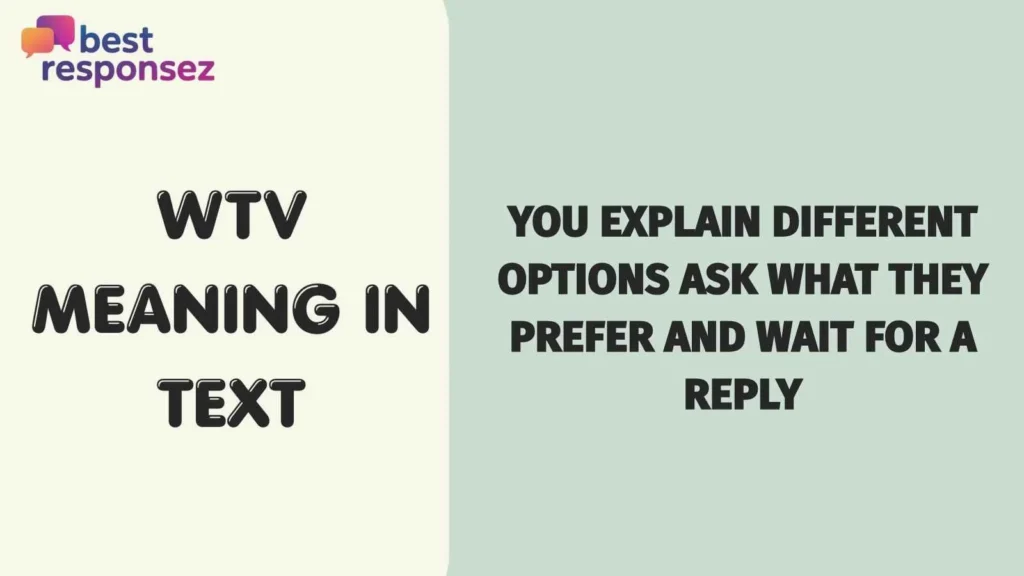
The WTV meaning in text is simply “Whatever.”
Instead of typing the full word, many people shorten it to WTV because it’s faster and easier.
The exact meaning depends on the conversation. Sometimes it means:
- “I’m okay with anything.”
- “I don’t really care.”
- “Do whatever you want.”
- “It doesn’t matter.”
Although the letters stay the same, the emotion behind them changes based on the situation.
Simple Examples
Example 1
Alex: Pizza or burgers?
Sam: WTV. 😊
Meaning: Either choice is fine.
Example 2
Emma: Are you still upset?
Jake: WTV.
Meaning: Jake may be frustrated or doesn’t want to continue talking.
Example 3
Mia: Which movie should we watch?
Liam: WTV you want.
Meaning: Liam lets Mia decide.
Where Is WTV Commonly Used?
You’ll see WTV almost everywhere online because it’s short and easy to type.
📱 Text Messages
Friends often use WTV during casual conversations.
Example:
“WTV works for you.”
People use it in one-on-one chats and group conversations.
Example:
“I’m free after 6. WTV.”
👻 Snapchat
Snapchat users prefer short replies, making WTV very common.
Example:
“WTV lol.”
You’ll find WTV in DMs, comments, and story replies.
Example:
“WTV makes you happy.”
🎵 TikTok
TikTok comments often include WTV when users react to videos.
Example:
“WTV, this is funny 😂”
🎮 Gaming & Discord
Gamers use WTV during matches or voice chat discussions.
Example:
“WTV map you pick.”
Tone and Meaning Explained
One interesting thing about WTV is that its tone changes depending on the conversation.
😊 Friendly Tone
Here, WTV simply means flexibility.
Example:
“WTV you choose is fine.”
It sounds relaxed and easygoing.
😐 Neutral Tone
Sometimes it’s just a quick response without strong emotion.
Example:
“WTV.”
This simply means the person has no preference.
😒 Cold or Rude Tone
If someone is angry, disappointed, or tired of arguing, WTV may sound dismissive.
Example:
“Fine. WTV.”
In this situation, it can feel passive-aggressive.
Examples of WTV in Conversation
Here are some realistic chat examples.
Example 1
Sarah: Want sushi tonight?
Emma: WTV works.
Example 2
Jake: Blue shirt or black shirt?
Chris: WTV looks good.
Example 3
Anna: Should we leave now?
Lily: WTV.
Example 4
Mark: Are you coming?
Ben: WTV happens.
Example 5
Olivia: Which café?
Sophia: WTV you like.
Example 6
Noah: Sorry if I upset you.
Lucas: WTV.
(May sound annoyed.)
Example 7
Emily: Netflix?
Grace: WTV 😂
(Friendly and relaxed.)
WTV Meaning From a Girl
When a girl texts WTV, the meaning depends on her mood and the conversation.
It may mean:
- 😊 She genuinely doesn’t mind.
- ❤️ She’s letting you decide.
- 😐 She’s not interested in arguing.
- 😒 She feels disappointed.
- 😔 She’s emotionally tired.
Friendly Example
“WTV you want 😊”
Meaning:
“I’m okay with your choice.”
Upset Example
“WTV.”
Meaning:
“I don’t want to keep discussing this.”
Always consider the conversation instead of assuming the worst.
WTV Meaning From a Guy
Guys usually use WTV in similar ways.
Common meanings include:
- No preference
- Casual agreement
- Ending a discussion
- Showing frustration
- Acting relaxed
Example
Friend: Which game?
Guy: WTV.
Meaning:
“I’m fine with either.”
Another example:
You: Why aren’t you replying?
Guy: WTV.
This may suggest annoyance or that he doesn’t want to continue the conversation.
Is WTV Ever Rude or Offensive?
Not usually.
However, it can feel rude depending on how it’s used.
| Situation | Meaning |
|---|---|
| 😊 Friendly | No preference |
| 🙂 Casual | Either option is okay |
| 😐 Dry | Short but not necessarily rude |
| 😒 Passive-aggressive | Doesn’t want to continue talking |
| 😠 Angry | Can sound dismissive |
If someone sends only “WTV.” after an argument, it often feels colder than if they say:
“WTV you think is best.”
The extra words make it sound much friendlier.
When to Use and When NOT to Use
| ✅ When to Use | ❌ When NOT to Use |
|---|---|
| Casual texting | Job applications |
| Friends | Professional emails |
| Family chats | School assignments |
| Gaming chats | Business meetings |
| WhatsApp conversations | Formal customer service |
| Social media DMs | Important discussions requiring clarity |
Using WTV in professional communication can appear careless or disrespectful.
WTV Meaning in Chat vs Social Media
Although the abbreviation is the same, the context changes.
In Chat
Usually means:
- Whatever
- Either choice is okay
- No preference
Example:
“WTV you want.”
On Social Media
It can express opinions, reactions, or memes.
Examples:
- “WTV 😂”
- “People will complain WTV happens.”
- “WTV, I’m still watching.”
Social media often uses WTV in a humorous or sarcastic way.
Similar Slang Words or Alternatives
| Slang | Meaning | Common Usage |
|---|---|---|
| IDC | I don’t care | Casual chats |
| IDK | I don’t know | Everyday texting |
| IMO | In my opinion | Discussions |
| TBH | To be honest | Honest opinions |
| BRB | Be right back | Temporary absence |
| BTW | By the way | Changing topics |
| NVM | Never mind | Ending a topic |
| K | Okay | Very short reply |
| Meh | Not excited | Showing little interest |
| Fine | Acceptance | Can sound positive or annoyed |
Other Meanings of WTV
Although Whatever is the most common meaning, WTV can occasionally have other meanings depending on the context.
These include:
- Whatever
- Whatsoever (rare)
- Personal abbreviations in private groups
- Usernames or gaming tags
- Brand initials
In almost every text conversation, Whatever is the intended meaning.
Why Do People Use WTV?
Internet slang exists because people want to communicate quickly.
Here are the biggest reasons WTV became popular.
1. Faster Typing
Typing three letters is quicker than writing “whatever.”
2. Mobile Convenience
Most conversations happen on phones where shorter messages are easier.
3. Internet Culture
Social media encourages abbreviations like:
- LOL
- OMG
- SMH
- WTV
- FR
- TBH
4. Casual Communication
Friends don’t usually need formal language.
Instead of writing:
“I’m okay with any option you choose.”
People simply type:
“WTV.”
5. Saves Time
Quick conversations often rely on abbreviations to keep chats moving.
FAQs:
What does WTV mean in text?
WTV usually means “Whatever.” It expresses agreement, indifference, or acceptance depending on the context.
Is WTV rude?
Not always. It can sound friendly, neutral, or rude depending on the conversation and tone.
What does WTV mean from a girl?
It may mean she doesn’t mind your choice, wants to avoid an argument, or feels frustrated. The surrounding conversation is the best clue.
What does WTV mean from a guy?
Most guys use WTV to mean “whatever,” showing flexibility, indifference, or occasionally annoyance.
Is WTV the same as IDC?
No. WTV often means “whatever,” while IDC means “I don’t care.” They can overlap but are not always identical.
Can I use WTV in professional emails?
No. WTV is internet slang and isn’t suitable for professional or formal communication. It’s best reserved for casual conversations with friends or people who understand texting abbreviations.
Conclusion:
The WTV meaning in text is simple, but its tone can change dramatically based on the situation. Most of the time, it stands for “Whatever” and is used to show flexibility, save time, or keep conversations casual.
However, if someone sends only “WTV” during an argument, it may come across as cold or dismissive. Paying attention to the context, punctuation, and overall conversation will help you understand what the sender really means.
As texting and social media continue to evolve in 2026, abbreviations like WTV remain a popular part of online communication.
Knowing how they’re used can help you avoid misunderstandings and respond with confidence.

I’m Alexander Hayes, and I enjoy helping people communicate with confidence by finding the right response for every situation. I create well-researched, practical, and easy-to-follow reply guides that make conversations more natural and meaningful. My goal is to provide reliable advice and thoughtful responses that readers can use with confidence every day.