Imagine you’re texting a friend about weekend plans. You ask if they’re coming, and they reply, “I’ll opt out this time.” Later, someone else messages, “You can opt in if you’re interested.” If you’ve also seen OPT in chats or online conversations, you might wonder what it actually means.
The truth is that OPT doesn’t always have just one meaning. In most text conversations, it relates to choosing, joining, or declining something.
However, its exact meaning depends on the context. Let’s break it down in simple words.
Quick Answer
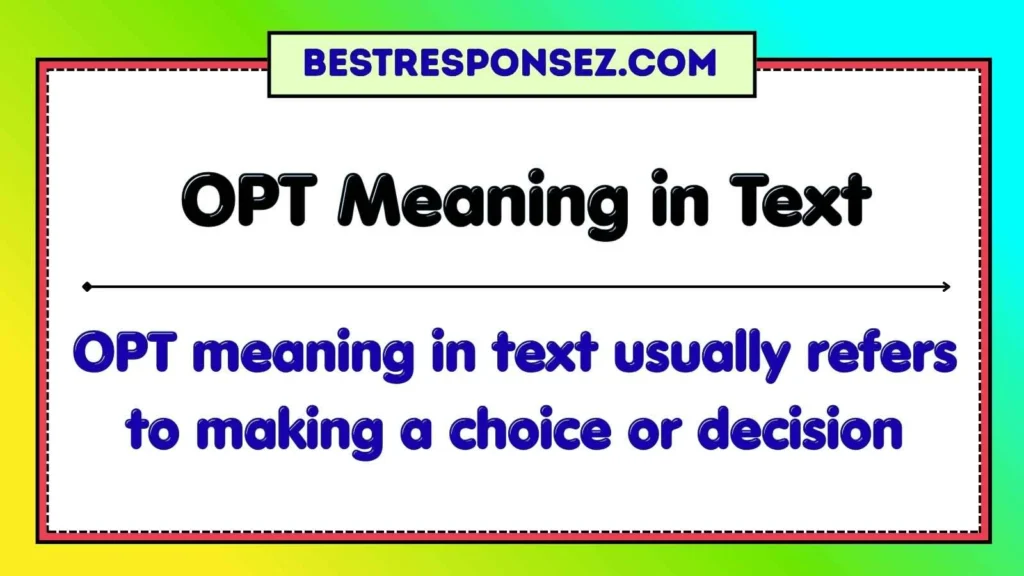
OPT meaning in text usually refers to making a choice or decision. It often appears in phrases like “opt in” (choose to join) or “opt out” (choose not to participate).
People use OPT to:
- ✅ Show they have chosen something.
- ✅ Accept or decline an invitation.
- ✅ Talk about preferences.
- ✅ Explain a personal decision.
- ✅ Keep messages short and clear.
What Does OPT Mean in Text?
The OPT meaning in text is simply to choose or to make a decision.
Unlike many internet abbreviations, OPT isn’t really slang by itself. It’s a regular English word that has become common in texting because it’s short and easy to understand.
You’ll usually see it in these phrases:
- Opt in = Choose to join.
- Opt out = Choose not to join.
Simple Examples
Example 1
Alex: Want to join our study group?
Ben: I think I’ll opt in.
Example 2
Emma: Everyone is playing tonight.
Noah: I’ll opt out. I’m tired.
Example 3
Sarah: Which package did you choose?
Jake: I opted for the premium one.
Where Is OPT Commonly Used?
You’ll find OPT meaning in chat across many online platforms.
Text Messages
Friends use it when talking about choices.
Example:
“I’ll opt out this weekend.”
Used in group chats and invitations.
Example:
“You can opt in whenever you’re ready.”
Snapchat
Friends may use it when deciding whether to join streaks, games, or plans.
Often appears in comments or DMs.
Example:
“I’d probably opt for the blue one.”
TikTok
Creators sometimes ask viewers to opt in for updates or newsletters.
Gaming / Discord
Players frequently say they’ll opt out of an event or opt in for tournaments.
Tone and Meaning Explained
The tone depends on how OPT is used.
Friendly Tone 😊
Used politely while making a choice.
Example:
“I’ll opt in! Sounds fun.”
Neutral Tone 😐
Simply states a decision without emotion.
Example:
“I’ve decided to opt out.”
Rude or Cold Tone 😶
By itself, OPT is not rude.
However, saying only:
“I’ll opt out.”
without any explanation may sound distant or uninterested.
Adding a reason makes it friendlier.
Example:
“I’ll opt out because I’m busy today.”
Examples of OPT in Conversation
Example 1
Anna: Movie tonight?
Chris: I’ll opt in.
Example 2
Sam: Want to join the game?
Leo: I’ll opt out this round.
Example 3
Mia: Which phone are you buying?
Ryan: I’ll opt for the black one.
Example 4
Teacher: Anyone interested in extra classes can opt in.
Student: Sounds good!
Example 5
Friend: Everyone is going hiking.
Jake: I might opt out because of work.
Example 6
Lisa: Pizza or burgers?
Tom: I’ll opt for pizza.
Example 7
Amy: Are you joining the event?
Nick: Yes, I’m opting in.
OPT Meaning From a Girl
When a girl uses OPT, she is usually just expressing a choice.
Examples include:
- “I’ll opt in.”
- “I think I’ll opt out.”
- “I’d rather opt for something else.”
It normally sounds calm and polite rather than emotional.
The meaning depends on the conversation, not on who sends it.
OPT Meaning From a Guy
A guy generally uses OPT in the same way.
He may say:
- “I’ll opt out.”
- “I opted for the cheaper option.”
- “I’ll opt in next time.”
There is usually no hidden meaning.
The phrase simply communicates a decision.
Is OPT Ever Rude or Offensive?
No.
The word OPT itself is not offensive.
However, the way it’s used can affect how it feels.
It May Feel Dry
“I’ll opt out.”
Very short replies can seem less warm.
It May Feel Passive-Aggressive
Someone repeatedly saying:
“I’ll just opt out.”
could sound frustrated depending on the conversation.
It Can Be Very Polite
“I’ll opt out this time, but thanks for inviting me.”
This sounds respectful and friendly.
When to Use and When NOT to Use
| When to Use ✅ | When NOT to Use ❌ |
|---|---|
| Making a choice | When someone doesn’t know the phrase |
| Accepting invitations | In urgent emergency messages |
| Declining politely | When a simple “yes” or “no” is clearer |
| Choosing between options | In very formal writing where more detail is needed |
| Talking about preferences | If it may confuse young readers |
OPT Meaning in Chat vs Social Media
In Chat
People mostly use OPT to describe personal decisions.
Examples:
- “I’ll opt in.”
- “I’ll opt out.”
The focus is on conversation.
On Social Media
The phrase often appears in posts, giveaways, newsletters, and online forms.
Examples:
- Opt in for updates.
- Opt out of emails.
- Opt in to notifications.
Here, it’s more about subscriptions or participation.
Similar Slang Words or Alternatives
| Word | Meaning | Usage |
|---|---|---|
| Choose | Select something | Everyday conversations |
| Pick | Decide between options | Casual texting |
| Select | Make a choice | Formal and informal |
| Go with | Prefer something | Friendly chats |
| Decide | Make a decision | General use |
| Accept | Say yes | Invitations |
| Decline | Say no | Invitations or requests |
Other Meanings of OPT
Depending on the situation, OPT can also stand for:
| Meaning | Where It’s Used |
|---|---|
| Optional | School or work |
| Optometry | Medical field |
| Optional Practical Training | International students in the U.S. |
| Optical | Technology and electronics |
Always use the surrounding conversation to understand which meaning is intended.
Why Do People Use OPT?
People like using OPT because it’s quick and easy.
Fast Typing
Short words make texting faster.
Internet Culture
People prefer simple expressions that everyone understands.
Convenience
Instead of writing a long explanation, they can simply say:
- “I’ll opt in.”
- “I’ll opt out.”
- “I opted for this.”
It’s direct and saves time.
FAQs:
What does OPT mean in text?
It usually means to choose or make a decision, especially in phrases like opt in and opt out.
Is OPT slang?
Not really. It’s a normal English word that is commonly used in texting and online conversations.
What does opt in mean?
It means you choose to participate or join something.
What does opt out mean?
It means you choose not to participate.
Is OPT rude?
No. It is generally polite. Only the tone of the message may make it seem cold or distant.
Can OPT have other meanings?
Yes. Depending on the context, it can also mean Optional, Optometry, Optical, or Optional Practical Training.
Final Thoughts:
The OPT meaning in text is all about making a choice. Whether someone says opt in, opt out, or opt for, they’re simply explaining a decision. It’s not an internet slang term in the traditional sense, but it’s very common in chats, social media, and everyday conversations.
Once you understand the context, OPT meaning in chat becomes easy to recognize.
The next time you see it in a message, you’ll know that it’s usually about someone choosing what they want—or don’t want—to do. 😊

I’m Alexander Hayes, and I enjoy helping people communicate with confidence by finding the right response for every situation. I create well-researched, practical, and easy-to-follow reply guides that make conversations more natural and meaningful. My goal is to provide reliable advice and thoughtful responses that readers can use with confidence every day.